Table CRoulette
Roulette Odds, Bet by Bet
- 4 min
- pg. 21
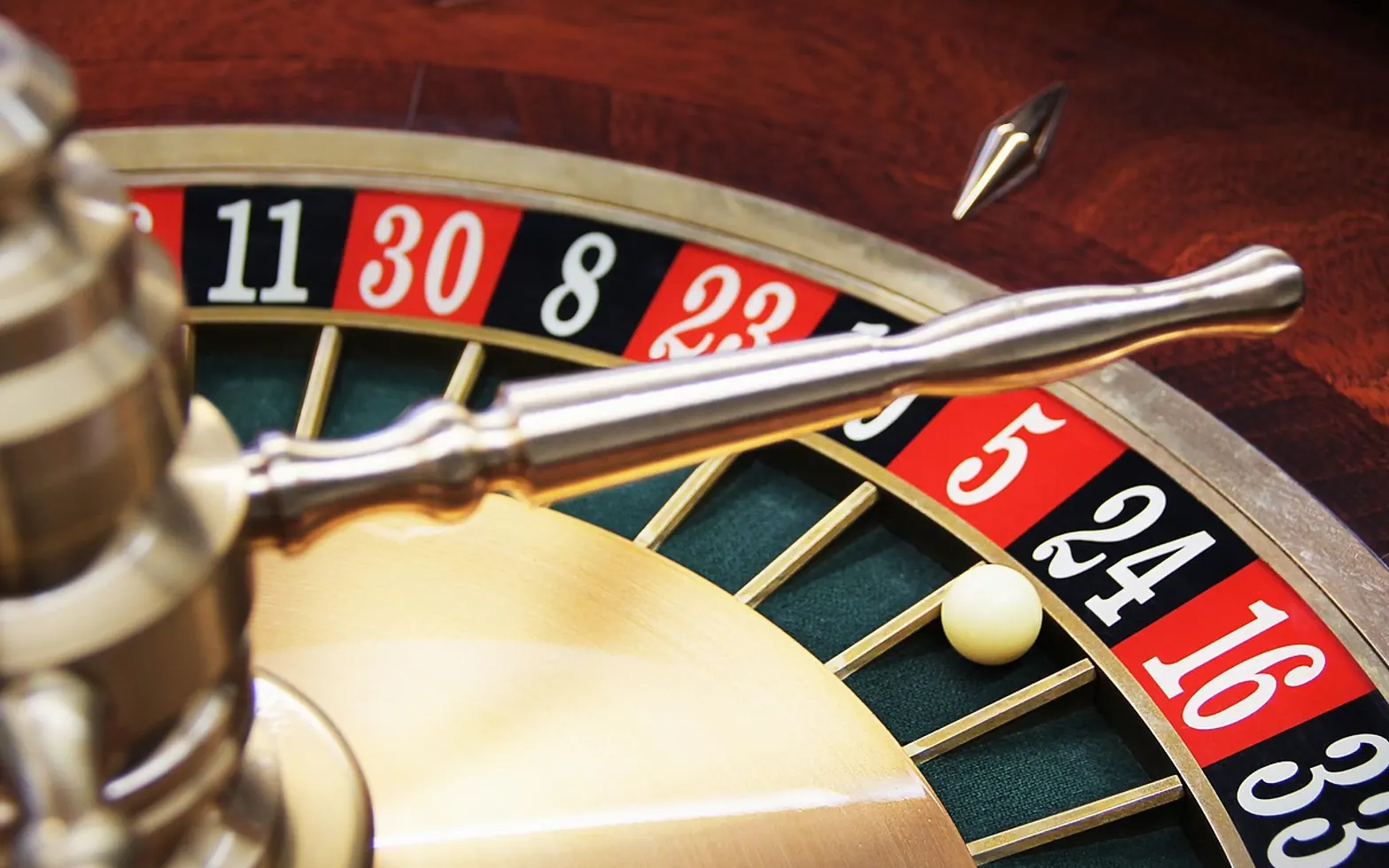
Roulette odds are refreshingly honest once you write them down. Every bet on the layout covers a fixed number of pockets, and every bet has a printed payout. Compare the two and you can see exactly where the casino's share comes from, without any guesswork or inside knowledge. This article goes through the standard bets one at a time for readers aged 18 and over who like to know what they are paying for.
Two ways to describe the same chance
Before the numbers, a quick note on language. The probability of a bet is the share of spins on which it wins: covered pockets divided by total pockets. The odds against compare losing pockets with winning ones. A single number on a European wheel has 1 winning pocket and 36 losing ones, so the odds against it are 36 to 1. The casino pays 35 to 1. That gap of one unit is the whole story of roulette's edge, repeated on every bet.
The full table
The figures below come straight from the pocket count: 37 pockets on a single-zero wheel and 38 on a double-zero wheel.
| Bet | Numbers | Pays | Chance (single zero) | Chance (double zero) |
|---|---|---|---|---|
| Straight up | 1 | 35 to 1 | 2.70% | 2.63% |
| Split | 2 | 17 to 1 | 5.41% | 5.26% |
| Street | 3 | 11 to 1 | 8.11% | 7.89% |
| Corner | 4 | 8 to 1 | 10.81% | 10.53% |
| Five-number (0, 00, 1, 2, 3) | 5 | 6 to 1 | not offered | 13.16% |
| Six line | 6 | 5 to 1 | 16.22% | 15.79% |
| Dozen or column | 12 | 2 to 1 | 32.43% | 31.58% |
| Red/black, odd/even, high/low | 18 | 1 to 1 | 48.65% | 47.37% |
If you are still getting to know the layout itself, our guide on how to play roulette shows where each of these chips goes.
Why almost every bet has the same edge
Here is the neat part. Roulette payouts are set as if the wheel had only 36 pockets. A bet covering n numbers pays enough that, on a 36-pocket wheel, it would break even over time. The zero (and double zero) are extra pockets the payouts ignore.
- On a single-zero wheel, every standard bet returns on average 36 units for every 37 staked. The house edge is 1/37, about 2.70%, whether you bet one number or eighteen.
- On a double-zero wheel, the average return is 36 units for every 38 staked, an edge of 2/38, about 5.26%.
- The five-number bet is the odd one out. It pays 6 to 1 but should pay 6.6 to 1 on that wheel, which pushes its edge up to 3/38, about 7.89%. It is the most expensive bet on a standard American table.
Some single-zero tables add la partage or en prison rules, which return or hold half of an even-money stake when zero comes up. On those bets only, the edge drops to about 1.35%.
What the edge means in practice
The edge is an average over a very long run of spins, not a fee taken from each one. Picture 100 spins at 10 units a spin, 1,000 units in total action. On a single-zero wheel the rules point to an average cost of about 27 units; on a double-zero wheel, about 53. Any real session can land far above or below those marks, because roulette is volatile, but the more you play, the closer results tend to drift towards the average.
Choosing a bet changes the ride, not the price
Since the edge is the same on nearly every bet, what you choose mostly changes the shape of the swings:
- Even-money bets win a little under half the time. Your balance moves in small steps.
- Dozens and columns win about a third of the time, with bigger jumps both ways.
- Straight-up bets miss most of the time. On a single-zero wheel a chosen number can go 37 spins without appearing in roughly 36% of stretches that long, so long dry runs are normal, not a sign that it is due.
Odds that do not change
Each spin is independent. The ball does not know what happened before, so a run of reds, a cold number or a "hot" section of the wheel changes nothing about the next result. Betting systems rearrange your stakes but leave every probability in the table above exactly where it was. The same logic applies to the return figures quoted for slots, which we unpack in how to read slot RTP.
The short version
- Where both wheels are on offer, sit at the one with a single green pocket.
- Skip the five-number bet on American tables.
- Choose bets for the pace you enjoy, knowing the cost stays the same.
- Set a spending limit and a stop time before you sit down, and keep to both.
Understanding the odds will not make you win more often. It will help you see roulette for what it is: a game you pay to enjoy, best kept to amounts you can comfortably afford to lose.
Found a payout that looks off?
Tell us which sentence, and we will recheck it against the rules.